Over the past several weeks, I’ve been quietly exploring new opportunities. Like many professionals in transition, I’m looking for a role where I can build on my IT experience, contribute to strong company visions, and continue growing as a leader. Along the way, though, I’ve noticed something that deserves more attention: the rise of what I am calling job opportunity scammers.
These are not recruiters looking to connect you with your next career chapter. They are individuals using convincing tactics to appear legitimate with one simple goal: to collect personal information, often leading to identity theft or fraud.
The experience has been eye-opening. I’ve come across fake job listings, false recruiter profiles, and even email threads designed to mimic real companies. It’s made me realize that in today’s job market, protecting your personal data is just as important as perfecting your résumé.
The Growing Threat
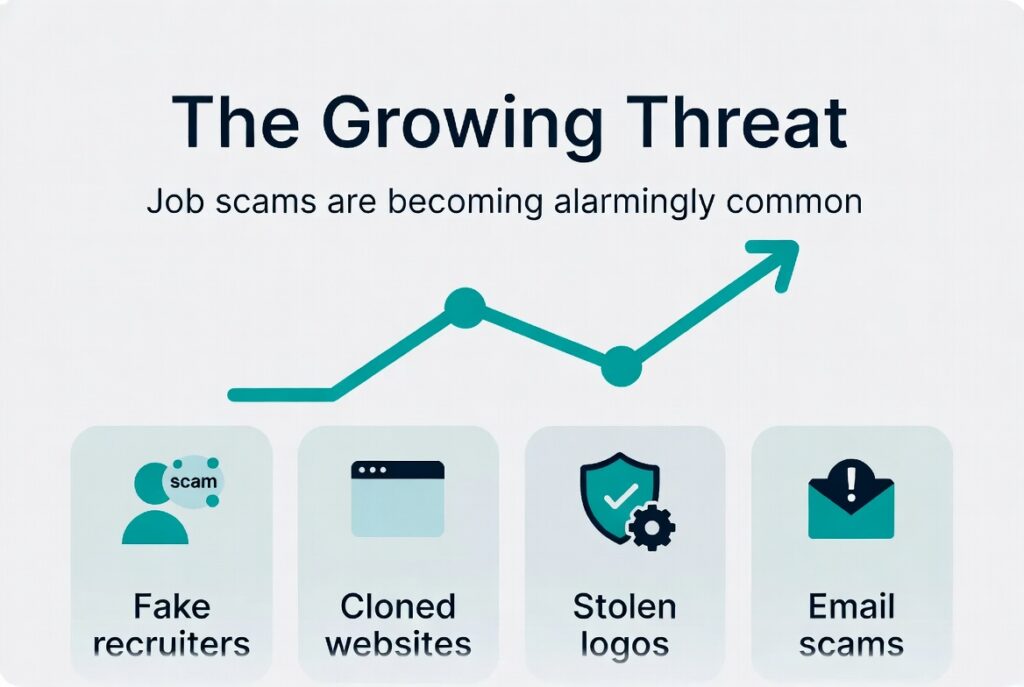
Job scams are becoming alarmingly common. Between 2020 and 2024, reported cases nearly tripled, costing job seekers over $500 million in 2024 alone. Scammers have become highly skilled at impersonating reputable organizations using stolen logos, cloned websites, and official-looking email addresses.
They know how to prey on opportunity-driven professionals, especially those actively exploring a career move.
Common Red Flags to Watch For
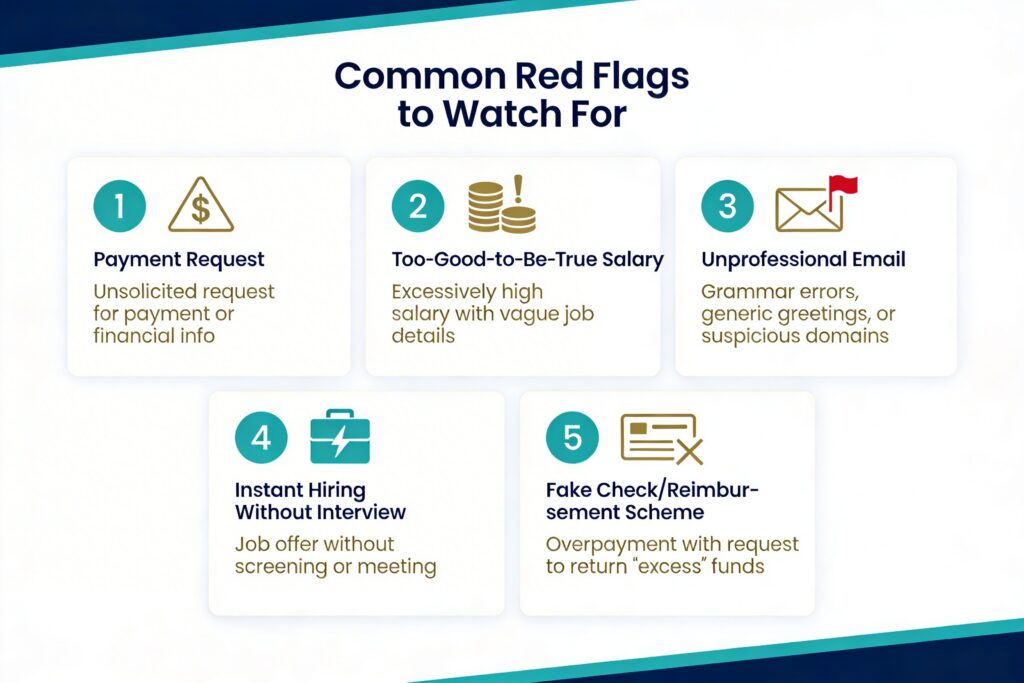
- Requests for Payment: No legitimate employer or recruiter will ever ask you to pay for training, materials, or job placement.
- Too Good to Be True Offers: Be cautious of entry-level jobs offering executive-level salaries or “no experience necessary.”
- Unprofessional Communication: Messages sent from personal email accounts (like Gmail or Yahoo) or written with poor grammar should be a warning sign.
- Instant Hiring: Real employers have hiring steps. If someone wants to hire you immediately with no interview, that’s a red flag.
- Check or Reimbursement Schemes: Never deposit a check from someone you haven’t met or send money to cover “supplies” or “equipment.”
How to Stay Safe
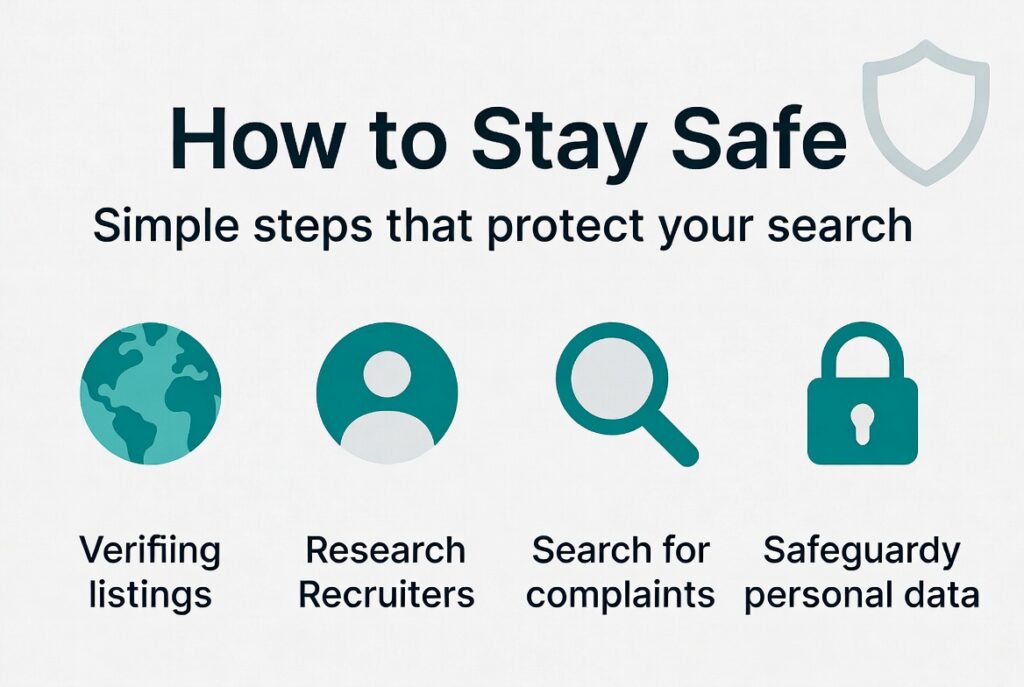
- Verify the Listing: Always cross-check job postings on the company’s official website to confirm the opportunity is real.
- Research the Recruiter: Look up the recruiter on LinkedIn and confirm their employment history and professional connections.
- Search for Scams: Use search engines to look up the company name along with words like “scam,” “review,” or “complaint.”
- Safeguard Your Data: Don’t share sensitive information such as your Social Security number, bank details, or ID until you are officially hired and going through onboarding.
Closing Thoughts

It’s unfortunate that job seekers today face this added challenge, but awareness is our best defense. The more we talk about it, the harder it becomes for scammers to succeed.
If an offer feels “too good to be true,” take a step back and verify. Legitimate opportunities will hold up under scrutiny, and trustworthy employers will appreciate your diligence.
Staying safe doesn’t just protect your data, it protects your peace of mind during what should be an exciting new chapter.
Quick Action Checklist:
- Verify the company careers page before responding to any job posting.
- Search the recruiter on LinkedIn to confirm their professional history.
- Google “[Company] scam” to check for complaints or red flags.
- Never pay for job training or equipment – legitimate employers never ask.
- Protect your personal information until after official onboarding.
Shared on LinkedIN