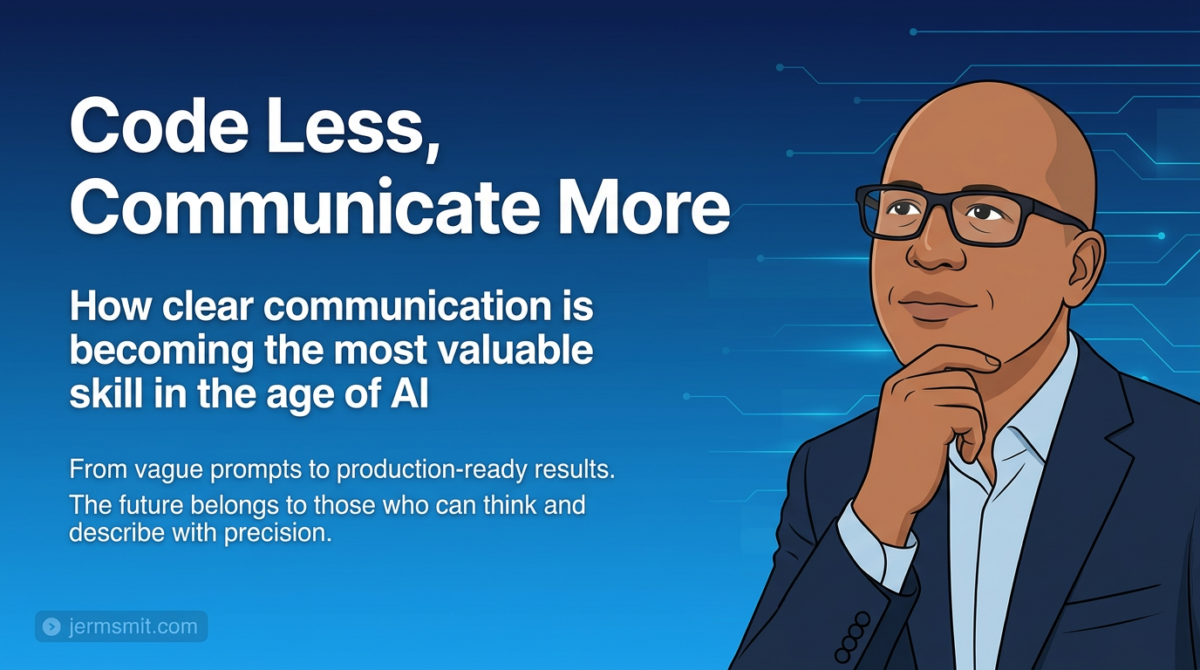
AI is no longer just a tool for specialists; it’s becoming a co-pilot for every engineer and innovator today. Tools like GitHub Copilot and Claude among others are churning out code faster than ever, handling boilerplate tasks and even suggesting optimizations. But here’s an insight many people are sleeping on: as AI democratizes software development, the ability to communicate clearly is becoming more valuable than the ability to code itself. (read it again)
Ideas need to be framed, contextualized, and shared in a way that AI can act on. Vague prompts yield mediocre results. Consider the difference between:
- “Build a user login system”
- “Design a secure OAuth 2.0 login flow for a React app, prioritizing JWT tokens, rate limiting to 5 attempts per minute, and HIPAA-compliant logging.”
In the second version? AI delivers production-ready code in seconds, because you spoke its language. The gap between those two prompts isn’t technical knowledge. It’s clarity.
You Don’t Have to Be an Engineer to Build Like One
Take my recent experience building a few small apps and sharing them on my GitHub. I used AI to prototype not just the idea, but the full installation process, troubleshooting bugs along the way and publishing to my repository. I’m not a software engineer. But I understood the process, what I needed, why I needed it, and how to describe it well enough that AI could execute.
In this the barrier to building is no longer can you write the code; it’s can you clearly describe what you want to build?
Think of it like being an architect versus a bricklayer. An architect doesn’t lay every brick, but they do need to communicate the blueprint so precisely that anyone (or anything) can build from it. AI is your crew. Your job is the blueprint.
Where Most Teams Get It Wrong
Here’s a real-world pattern: a junior developer asks an AI to “fix the bug” without explaining what the bug does, what behavior is expected, or what the surrounding system looks like. The result is a patch that works in isolation but breaks something else downstream.
Compare that to: “This Python function is supposed to parse ISO 8601 timestamps from user input, but it’s throwing a ValueError when the timezone offset is missing. Here’s the stack trace and a sample input. Fix it while maintaining backward compatibility with our existing API responses.”
Same problem, but different outcomes. The second engineer isn’t necessarily more technical; they’re more articulate.
What Organizations Should Do About It
Companies need to sponsor a new kind of literacy, not just in code, but in communication. A few concrete ideas:
- Prompt engineering workshops that blend technical structure with storytelling, because a great prompt is basically a clearly defined story.
- “AI pitch sessions” where junior devs pair with mentors to practice describing problems before they start building.
- Code review that includes prompt review, treating the prompts used to generate code as artifacts worth examining.
Teams that master the ability to articulate better, innovate faster, and unlock AI’s true potential. Not because they know more syntax, but because they’ve learned to think out loud with precision.
The companies that win the next decade won’t just have developers who can code. They’ll have communicators who can build.
How is your organization fostering this balance between technical skill and communication clarity? Share a win, or a flop, in the comments. I’d love to hear it.