What I Learned Updating My Resume After 11 Years
After more than a decade transitioning in stable technology leadership roles, I recently found myself dusting off my old resume, a document I hadn’t touched in 11 years. What surprised me wasn’t how much my career had evolved. It was how much the rules of the resume game had changed.
Back when I last wrote mine, the goal was to craft a polished summary that told a compelling story. Today, you are writing for both a human recruiter and an algorithm known as an ATS (Applicant Tracking System).
Understanding ATS
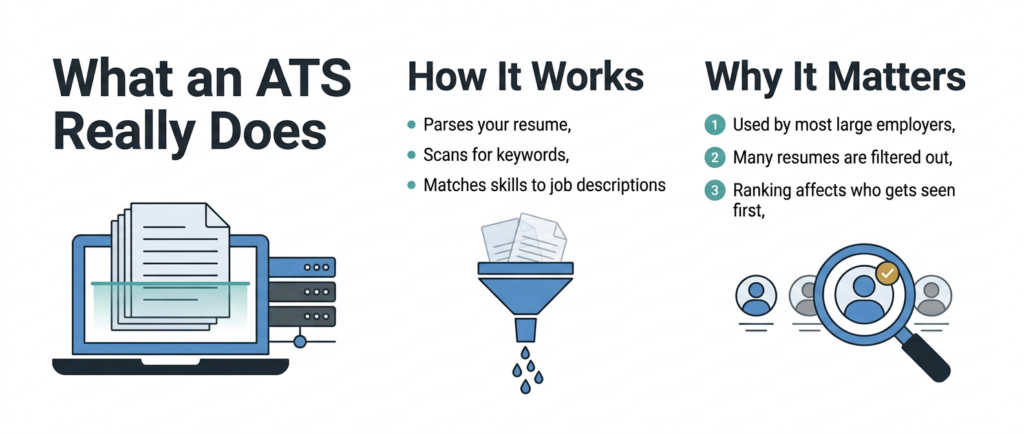
Here’s the wake‑up call I got very quickly: nearly 98% of Fortune 500 companies use ATS software to filter, score, and rank resumes before a recruiter even sees them. Roughly three out of four resumes never make it past this digital gatekeeper.
An ATS doesn’t read your resume like a person does. Instead, it scans for keywords, structure, and formatting that align with the job description. If your document isn’t correctly formatted or lacks the right language, your experience might never reach human eyes.
The Scoring Game
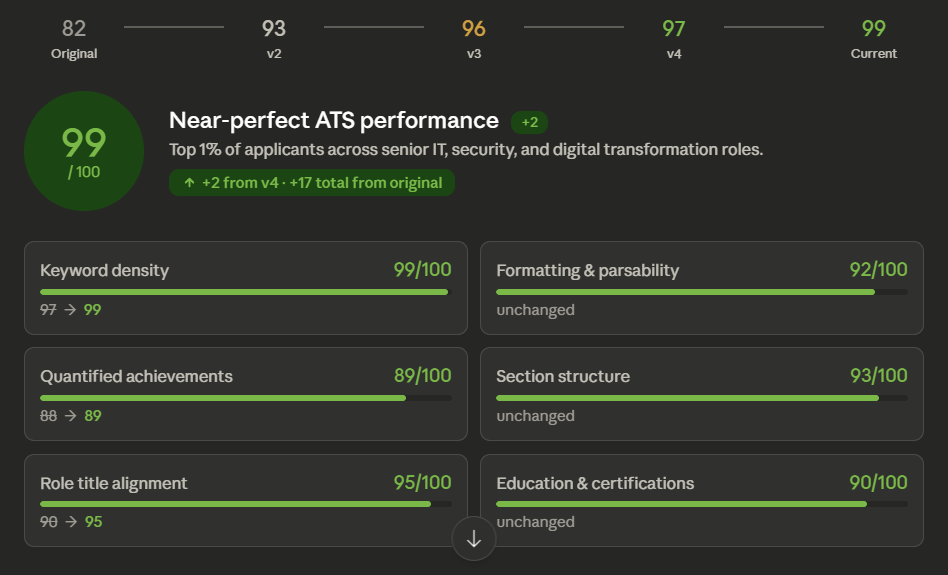
Most systems assign your resume a compatibility score based on how closely it matches the job description. Here’s what I learned through trial, error, and a few modern resume tools:
- Target a score above 75%. A 70 to 75 percent rating is good; 80 percent or higher puts you among the top‑ranked candidates.
- Be mindful of keyword balance. Include relevant technical and leadership terms naturally, not excessively. Over‑stuffing can make your resume sound robotic.
- Formatting matters. Simple, text‑based layouts work best. Avoid tables, images, or PDFs that the ATS can’t easily process.
- Quality still wins. A resume that scores well but reads poorly won’t help you in interviews. You are writing for software and people.
My Takeaway
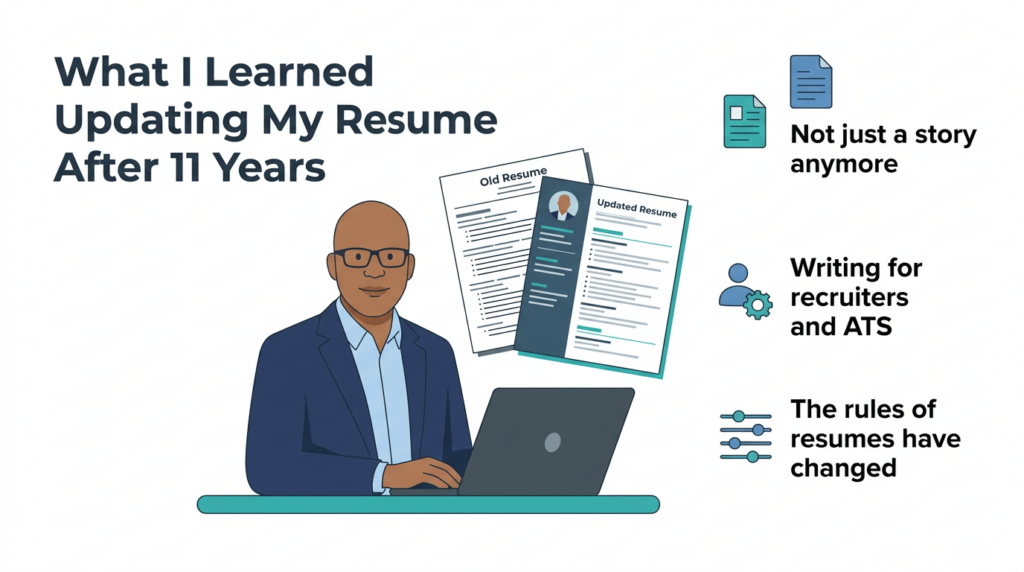
At first, adapting to ATS felt like just another technical challenge, one more system to optimize. Later I realized it’s not about gaming the algorithm. It’s about communicating clearly in two languages: one for the software that sorts, and one for the humans who hire.
Modern resume writing is part storytelling and part search‑engine optimization. Getting both right can be the difference between silence and opportunity.
With that, time to share my story, and enter my next chapters.
Shared on my LinkedIN