If you have spent any time architecting or leading enterprise infrastructure over the past few decades, VMware has likely been the constant thread running through your data center operations. Having spent years deeply embedded in that ecosystem as a VMware vExpert and Certified VMware Data Center Professional, I know firsthand why it earned that position. VMware’s strongest moat has never just been the hypervisor itself; it has been the deep, frictionless integration across the broader enterprise ecosystem. Storage arrays, backup vendors, networking layers, and support frameworks all spoke VMware fluently.
As an IT leader focused on aligning infrastructure strategy with business outcomes, the conversations I have around virtualization look very different. When organizations evaluate moving away from VMware, particularly following the industry shifts and licensing changes under Broadcom, the discussion almost always hits the same roadblock: integrations. Specifically, how do you modernize your virtualization tier and control costs without breaking the enterprise storage workflows your teams rely on?
That is precisely why Proxmox’s announcement that Everpure (formerly Pure Storage) has joined its partner ecosystem as an official Solution Provider is a massive milestone.
Removing the Migration Hurdle for Infrastructure Leaders
For a long time, Broadcom has banked on the sheer friction of migration. They know that untangling decades of deeply embedded operational processes is daunting for any IT organization. Part of that friction has been the lack of official, Tier-1 vendor support for alternative hypervisors on enterprise-grade storage hardware.
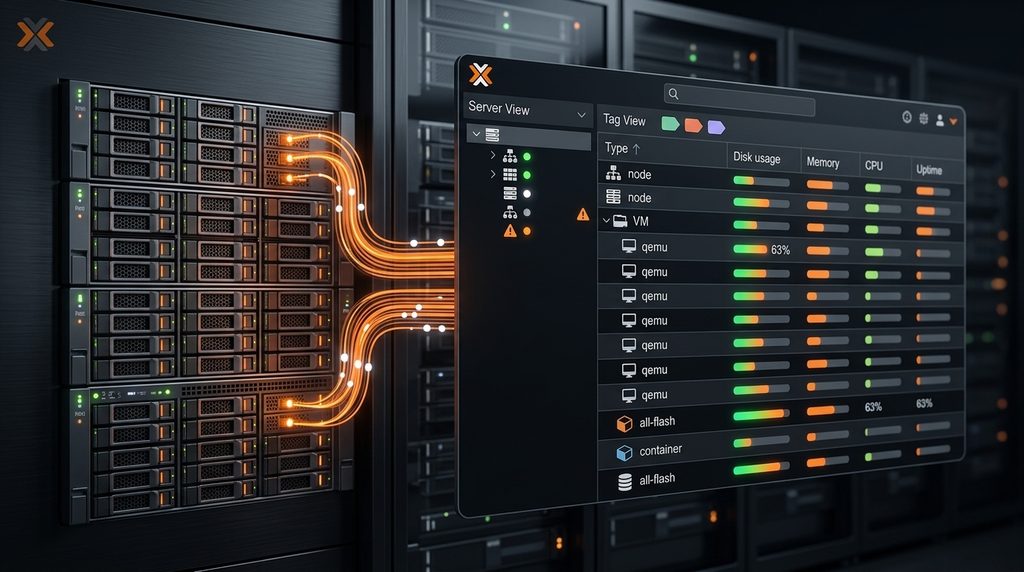
With Proxmox Virtual Environment (PVE) now officially supported across the full Everpure FlashArray™ family (covering iSCSI, Fibre Channel, NVMe/TCP, and NFS), that particular hurdle is shrinking fast. Organizations sitting on high-value enterprise storage arrays with years of remaining useful life no longer face an all-or-nothing hardware refresh. From a leadership and budgetary perspective, being able to protect existing capital investments while introducing a cost-effective hypervisor is a game changer. Teams can keep their trusted storage arrays, maintain their operational practices, and adopt Proxmox with confidence. Long overdue IMO…
What This Unlocks for Engineering Teams
I’m genuinely excited to see major storage vendors putting real engineering time behind Proxmox. When you empower technical teams with native capabilities rather than clunky workarounds, adoption accelerates. This integration brings critical capabilities to the table:
- Native storage plugins that connect directly to your clusters.
- Automatic volume provisioning that streamlines deployment workflows.
- Offloading snapshots directly to the storage array for rapid, low-overhead data protection.
- Leveraging storage array horsepower for instant clones and heavy lifting.
While it does not solve every single niche enterprise requirement overnight, it removes the anxiety of vendor support and integration compatibility from your primary storage tier. Built-in high availability and live migration work seamlessly without copying disks between nodes.
The Writing on the Wall for VMware
A business strategy built on customer lock-in only works as long as the alternatives remain painful. Over the last few months, we have seen a steady stream of major storage and infrastructure vendors step up to make Proxmox a turnkey enterprise choice.
When a heavyweight like Everpure, a brand that veteran VMware administrators and storage architects instantly recognize and trust with mission-critical workloads, officially backs a platform, it signals a major shift in the market. It tells IT leaders that Proxmox is no longer just a great option for SMBs or lab environments; it is a viable, enterprise-ready destination for mainstream corporate data centers.
More vendors are actively helping make Proxmox a low-risk choice for their existing customer bases. For VMware, that should be ringing alarm bells.
What do you think? Are you seeing similar evaluation conversations happening in your organization, or are your teams already testing alternative hypervisors?
Let me know your thoughts in the comments below!
As an IT leader who has spent decades bridging deep technical architecture with practical business strategy, I love helping teams navigate these exact transitions. If your organization is looking to modernize its virtualization footprint, protect existing investments, and reduce operational costs without sacrificing reliability, let’s connect. I would welcome the opportunity to help guide your team through the move.