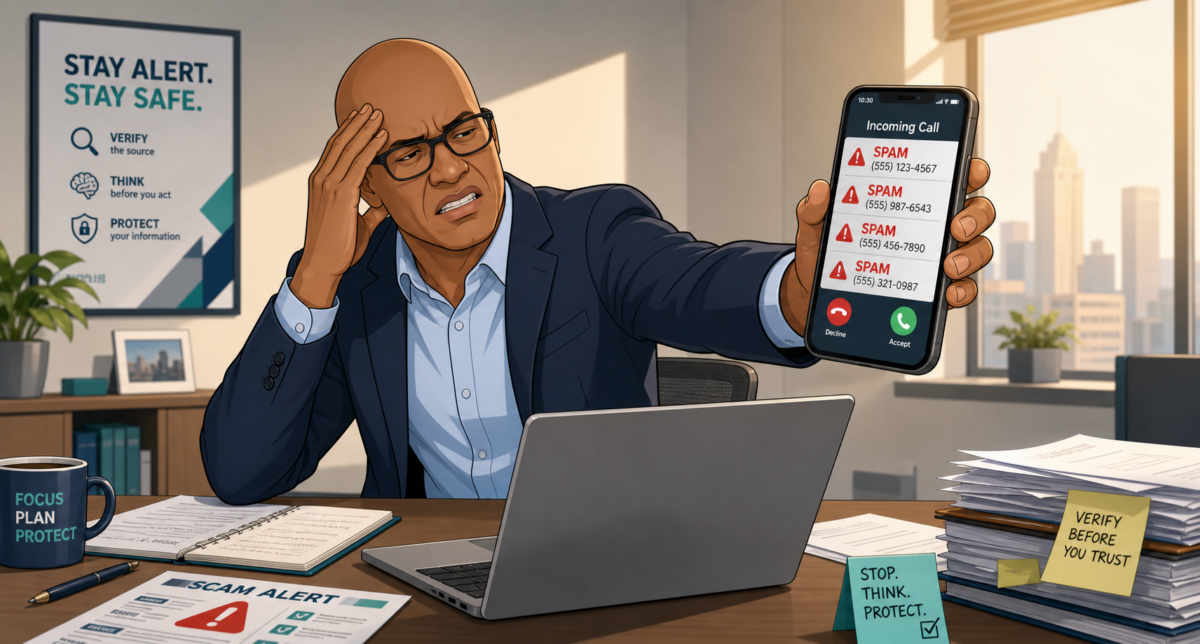
Many of us have all been there. The phone rings, you answer, and then… nothing. There is a brief, hollow silence for a few seconds before a voice finally kicks in or the line abruptly cuts off. It is easy to dismiss these moments as a bad connection or a simple wrong number. However, that brief window of quiet is actually the opening move in a highly coordinated, automated fraud scheme.
How Predictive Dialing Works
Predictive dialing is an automated process built with a specific goal in mind: identifying active phone numbers answered by actual human beings. When you pick up and offer a standard “hello,” you are providing the exact confirmation these systems are programmed to find. You are essentially marking your number as a “live” target.
The operation generally follows a four-step cycle:
- The Initial Blast: A single software program places hundreds or even thousands of calls every minute. This is not a traditional boiler room filled with people; it is an automated machine running tirelessly at all hours.
- Human Detection: That simple greeting you provide is the signal the software wants. During those three seconds of silence, the system analyzes the audio to confirm a person is on the line rather than an answering machine.
- The Connection: Once the software verifies you are a real person, it instantly routes the call to a human scammer who is waiting in the queue.
- The Pitch: Now that you are verified as responsive, the scammer begins their fraudulent script.
Why This Strategy Is Effective
Fraudsters survive on sheer volume. By using software to filter out millions of dead ends and voicemails, they can focus their energy exclusively on live responses. This efficiency significantly boosts their success rate. Since a single successful scam can net them thousands of dollars, this automated filtering is the backbone of their entire business model.
Your Best Defense: A Silent Shield
The most effective way to thwart this technology is remarkably straightforward. You can break their entire system by following one simple rule: the “Silent Shield.”
If you pick up a call and encounter that telltale three-second silence, do not say a word. Scammers require your voice to confirm that the number is worth their time. By remaining silent, you deny the software the “hit” it needs to mark your number as active in their database.
Practical Steps to Stay Secure
In addition to staying quiet during suspicious calls, you might consider these extra layers of protection:
- Screen Your Calls: Let any number you do not recognize go straight to voicemail. Legitimate callers will almost always leave a message, while automated systems usually hang up.
- Guard Your Information: Never provide or confirm personal details during an unsolicited call, regardless of how official the caller sounds.
- Leverage Technology: Most modern smartphones include built-in “Silence Unknown Callers” features or scam detection apps that can block these calls before they even ring.
- Official Registries: While it will not stop every criminal, adding your number to the National Do Not Call Registry provides a layer of legal recourse.
- Report the Activity: If you are targeted, take a moment to report the number to the FTC or your service provider.
The Bottom Line
That strange silence at the start of a call is no longer a mystery. When you understand the mechanics of the scam, you take away the element of surprise that these criminals rely on. Knowledge is your best protection.
The next time you hear that hollow quiet on the other end of the line, remember to use the Silent Shield. Stay silent, stay safe, and be sure to pass this information along to your friends and neighbors. A little bit of awareness can go a long way in keeping your hard-earned money where it belongs.